
A beautifully illustrated board game that pairs with a free companion app to turn family game night into something more meaningful — from "who takes out the bins" to "how do you feel about social media".
Family Xchange is a hybrid — not a board game with a nice-to-have app bolted on. The app is the brain, the board is the body. You need both to play — but the body can be a board you bought, one you printed at home, or a screen on the wall.
The boxed board on the kitchen table. Thick, folds flat, survives being sat on, and looks like something you would leave out on a shelf.
Nine A4 pages with cut lines and glue tabs, free with an account. Scissors, glue and an afternoon, and you have the full 50 × 50 cm board by teatime.
No paper at all. Open familyxchange.com/board on a smart TV, a laptop or a propped-up tablet, type in the game number, and the board is on the big screen.
Players roll a die and move their token around a board of 74 illustrated tiles. Landing on a Family Xchange tile triggers a challenge from the app — pitched at that player's age, by their favourite character. Landing on a gold X coin tile triggers a power play — jump ahead, swap positions, gift a move to a teammate, or deploy your shield. First to the end wins. Or co-operate to beat the bedtime clock. Your call.
Every challenge card belongs to one of three tiers. The first two are always on. The third is entirely parent-controlled — kids never see the settings menu.
Favourites, family memories, silly dares, and the kind of questions that end in everyone laughing. The floor of every session.
Chores, kindness, money basics, and safety — the everyday stuff families mean to talk about but rarely get to before someone's phone rings.
Social media, gaming, bodies, consent, money, mental health, peer pressure, difference. Each topic is off by default. Each card is reviewed by a specialist. Parents choose what's right for their family.
Every Tier 3 card is reviewed before it ships by a specialist in that topic — our panel includes a psychiatrist, an occupational therapist, a children’s physiotherapist, a teacher and a chartered accountant. Nothing said in a Big Conversation is ever recorded by the app.
Three modes. One family. Zero excuses to not have a game night.
First player to reach the end wins. Simple. Fast. Someone will gloat. That's the point.
Last player to reach the end wins. Power plays and careful tile-management win over raw speed. Patience, not momentum.
The whole family must reach the end before the bedtime clock catches up. Play warm (help each other) or set rivalry mode (compete quietly while cooperating out loud).
Each board is a winding path of 74 illustrated tiles from START to END. Most are ordinary squares. The rest are where the app takes over — a challenge card, or a power play. Same rules, same app, completely different table.
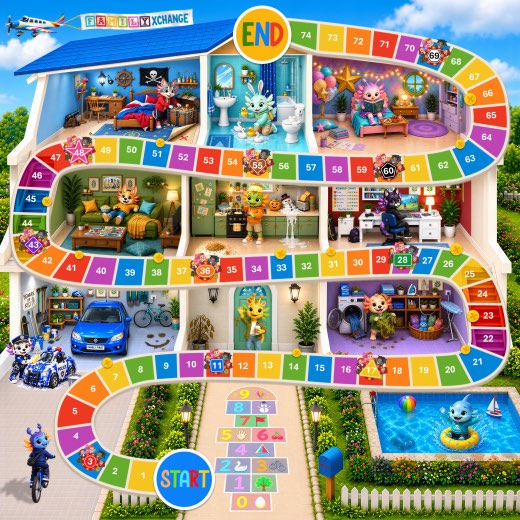
A cut-away family home — up the driveway, through the garage and laundry, across the kitchen and lounge, into the bedrooms. Eleven rooms, and everywhere a sock might go missing.
Challenge squares carry the Family Xchange logo. Power plays are marked with a gold X coin.
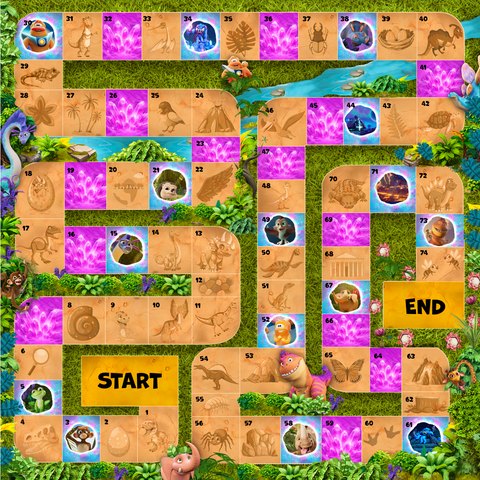
A prehistoric jungle of rock formations, a river, cave mouths and a volcano — built with the team behind the Jungle Beat animated series, and played by its own cast.
Challenges come through a blue Time Portal. Power plays are marked by a pink crystal.
The Family Xchange board is the one you can play now. Jungle Beat 2 is still being finalised and is expected in 2027. The boards are sold separately and both run on the same app, so when it arrives a family that has both will be able to play either without changing anything — the app knows which board is on the table.
The whole Family Xchange board, cut into nine A4 pages you can print on an ordinary home printer. Trim them, glue the tabs, and you have the full 50 × 50 cm board on the kitchen table — ready to play tonight. Free with a Family Xchange account.
It is a proper family afternoon in its own right.
Somebody cuts, somebody lines up the edges, somebody is in charge of the glue, and the youngest gets to press the pieces down. By the time it is dry, everyone already knows their way around the board — which room is which, where the gold coins are, how far it is to the roof.
Then you play on a board you made together. That is a different thing from a board that arrived in a box.
Free with any account. Prefer the real thing? The printed board is thicker, folds flat and survives being sat on — have a look in the shop.
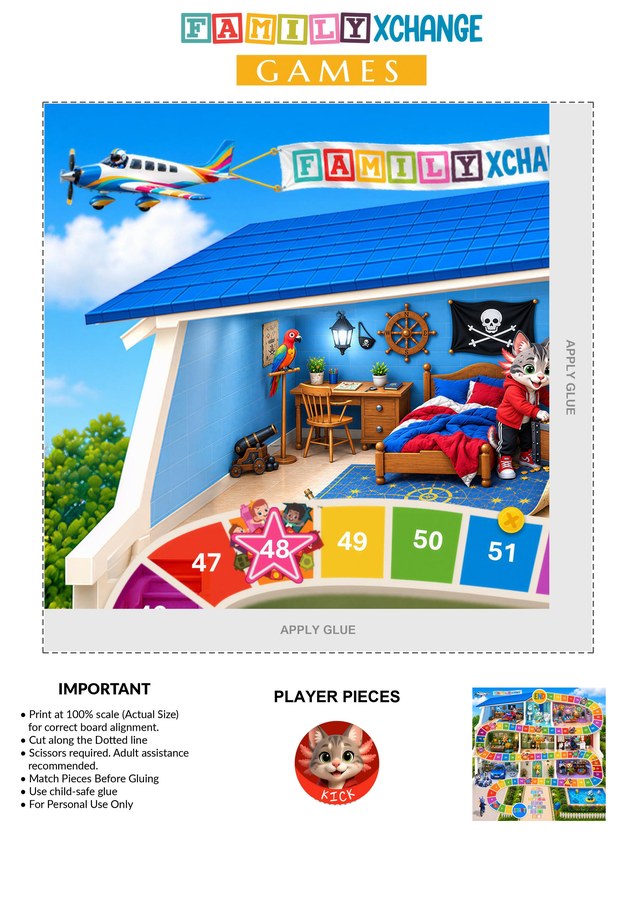
One of the nine pages. Every edge carries a cut line and a glue tab.
The companion app knows who’s playing and serves each player a challenge matched to their age. The deck keeps growing — new challenges are written and added all the time, so it takes a long while to repeat.
The companion app runs the challenges, the dice and the power plays. Activate your board once, then everyone in the family can play from their own device.
Just bought one? Enter the serial from the card in your box and set up your family. Takes about two minutes.
Activate a board ▸Sign in to start a new game, join one already running, or pick up a game you saved.
Sign in to play ▸Your board's serial number is on the card inside the box — 10 characters, letters and numbers.

A second board built with the team behind Jungle Beat, the animated series. Same app, same dice, same 74-tile journey — a completely different world at the table. It is not finished yet: the board is still in finalisation and we expect it in 2027. Everything below is what it will be, not what you can buy today.
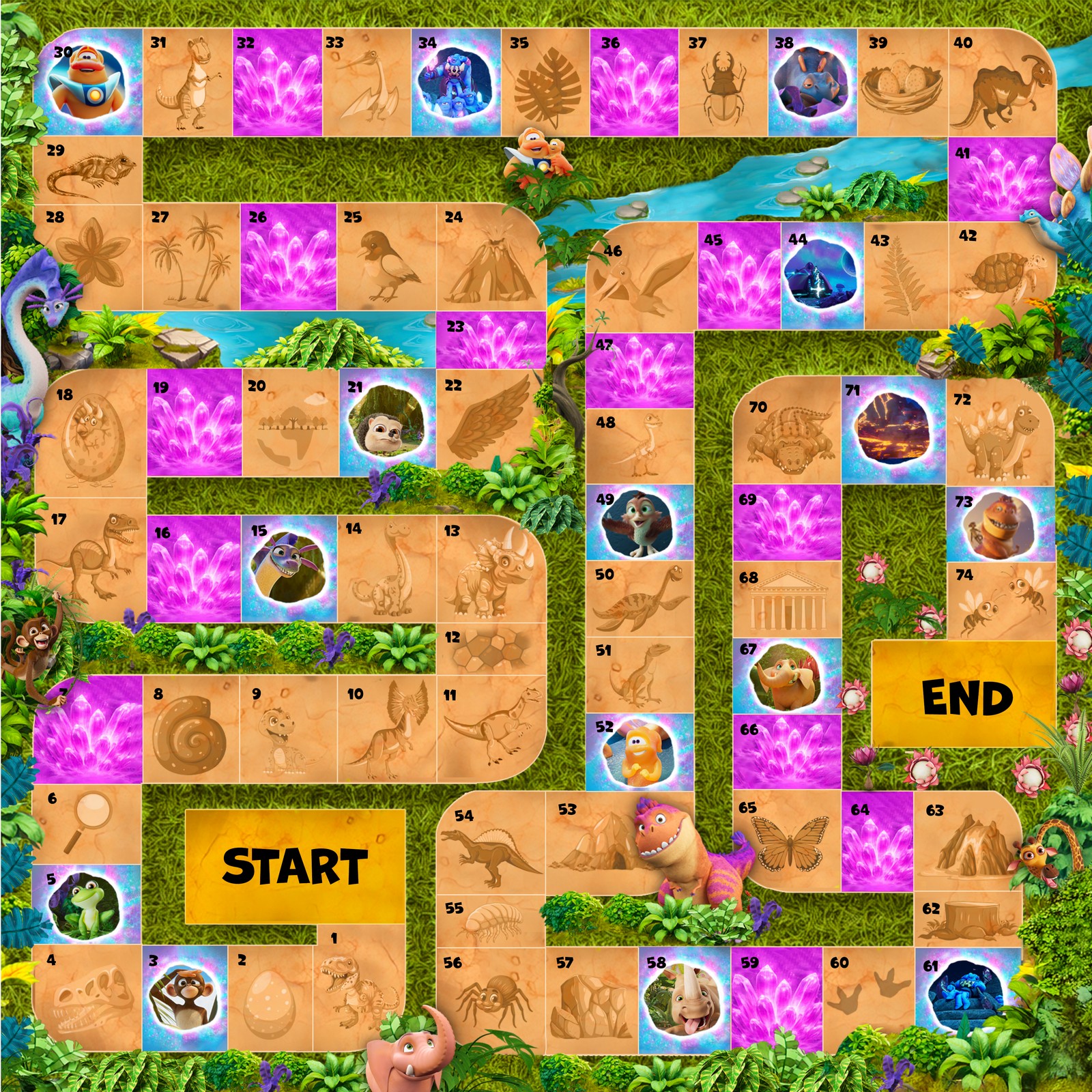
Where the Family Xchange board runs on conversation, Jungle Beat 2 runs on doing — mimic a firefly, invent a jingle, describe a dinosaur without naming it. Challenges are graded by age band, so a five-year-old and a teenager get very different cards from the same square.
Every challenge card is presented by a character — and each board has its own. The Family Xchange cast lives in the house; the Jungle Beat 2 cast lives in the jungle. They never mix.

























Artwork by the Jungle Beat studio.